
Dry Skin, Shedding, Anxiety: What If They’re All Connected? (Part 2)

In Part 1 of this series, I explained what blood deficiency is, why it matters for your pet’s health, and how to recognize it in your pet.
Now let’s talk about what to do about it.
The good news is that blood deficiency often responds well to dietary changes and herbs. The challenge is that not every pet responds the same way, and some need a more individualized approach.
Why Are So Many Pets Blood Deficient?
In addition to what we discussed in the previous post (the veterinary fear of fat), there are a few other factors I think are creating or contributing to this problem.
The nutritional guidelines are surprisingly low in fat.
The minimum veterinary requirement for the omega-6 to omega-3 ratio in pet food is 30 to 1.
Omega-3s and omega-6s are both types of fat that the body needs but can’t make on its own, so they have to come from food. You’ve probably heard of omega-3s as the “good fats” found in fish oil. They help reduce inflammation, support brain function, and keep skin and joints healthy.
Omega-6s are also necessary, but they’re often high in ingredients like chicken fat, vegetable oils, corn, and soy – in other words, foods that common pet food ingredients. In the right amounts, omega-6s are fine. The problem is that in most modern day diets (this applies to people too) there’s often too much omega-6 and not enough omega-3. This can lead to dryness, decreased circulation, and more inflammation.

The balance between these two fats is important. If we go back to the pet food requirement I mentioned above, it is saying that for every one part omega-3, there can be up to thirty parts omega-6. There is some evidence to suggest the ideal ratio should be much closer to 1 to 1.
So most commercial pet foods are loaded with omega-6s and contain only the bare minimum of omega-3s. This creates an imbalance that promotes inflammation rather than resolving it.
Many studies have shown the benefits of omega-3s for pets:
Decreased allergies and skin issues – Dogs with atopic dermatitis showed improved clinical scores after supplementation with omega-3 fatty acids in a double-blind, placebo-controlled trial. (PubMed)
Improved cognition and trainability in puppies – Puppies fed DHA-rich diets showed better cognitive, memory, and psychomotor function compared to puppies on standard diets. (PubMed)
Reduced arthritis symptoms – Dogs with osteoarthritis fed omega-3 rich diets showed improved weight-bearing and mobility, with some able to reduce their pain medication. (PubMed)
Better kidney function – Dogs with kidney insufficiency supplemented with omega-3s had less proteinuria, lower creatinine levels, and fewer kidney lesions over a 20-month trial. (PubMed)
Fewer seizures – A 2023 pilot study found that dogs with epilepsy given high-dose DHA showed a 50% or greater reduction in seizure frequency. (PMC)
This makes me wonder how many of these conditions could be prevented with better-balanced diets from the beginning?
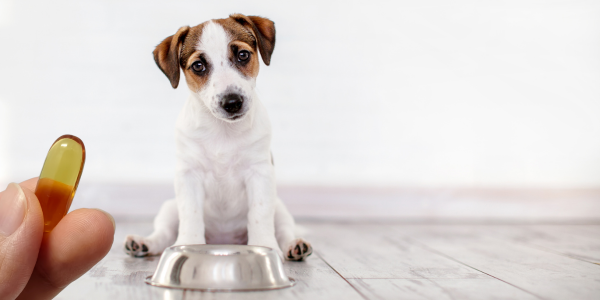
Processed food has limitations.
We rely more and more on processed food for pets, which is convenient, increases shelf life, and makes our lives easier. But as most of us know, fish oil and oils in general don’t keep well for long without refrigeration. Different manufacturing processes have been developed to keep things fresh longer, but the quality is just not going to be the same as eating fresh fish, canned fish, or getting the oil in its natural form.
This is especially true for dry kibble. It’s difficult to meet a pet’s good fat requirements with a food that needs to sit on a shelf for months without going rancid.
The Four Categories of Blood Deficient Pets
Over the years, I’ve noticed that blood deficient pets tend to fall into roughly four categories, and understanding which category your pet falls into can help guide your approach.
Category 1: The Easy Responders (about 25%)
These pets are simply not getting enough good fats in the diet. You add omega-3s, and everything improves. The coat gets shiny, the anxiety decreases, the shedding stops. This is the best-case scenario, and easiest to fix.
Category 2: The Fat-Sensitive Pets
Some animals truly cannot tolerate added fats without consequences. Even a few drops of fish oil causes diarrhea, or any added fat triggers a flare. While not every pet who has had a pancreatitis episode falls into this category, some genuinely do. For these animals, simply adding fish oil or more fat to the diet isn’t the answer. They need a more tailored approach, which I’ll discuss briefly below.
Category 3: The Mineral-Deficient Pets
These pets don’t respond well to omega-3 supplements alone because they’re also missing trace minerals and other nutrients. Adding fish oil helps a little, but not as much as expected. These pets often do better with whole food additions (like sardines, eggs. tripe, organ meats) rather than isolated omega-3 supplements, because whole foods provide the complete nutritional package.
Category 4: The Complex Cases
Some pets have blood deficiency alongside other patterns of imbalance. Their tongue might be bright red instead of pale, their coat is dry and greasy at the same time, or they just don’t seem to respond to omega-3s the way you’d expect. These pets often need Chinese herbs and possibly acupuncture to address the underlying imbalance before the blood deficiency can fully resolve. If you’ve tried adding good fats and aren’t seeing improvement, working with a holistic vet trained in Chinese medicine might help you fine tune what else is going on.
Easy Foods to Add
For most pets, the first step is adding nourishing, fat-rich whole foods to the diet. Here are my top recommendations:
Sardines
Sardines are probably my favorite food for blood deficiency. They have an excellent omega-6 to omega-3 ratio, plus they’re rich in zinc, iron, vitamin B12, and trace minerals that many commercial diets lack. Nutrients from whole food sources are generally better absorbed than synthetic vitamins added to processed food.
Many owners report that their pets not only love sardines but show a noticeable increase in energy and coat quality within a few weeks of adding them.
You can use fresh sardines or canned. While there’s been some discussion about sodium content in canned sardines, I haven’t seen problems in practice. Low-sodium versions are available if you prefer.
Suggested amounts (a can is 3.75 oz):
- Adult cats: 1 can per week
- Small dogs (under 20 lbs): 1 can per week
- Medium dogs (20-45 lbs): 1-2 cans per week
- Large dogs (over 45 lbs): 2-3 cans per week
Introduce slowly to prevent stomach upset, and reduce other food slightly to account for the extra calories.

Green Tripe
Tripe is the stomach of cows. There are two types: white (cleaned and bleached) and green (unprocessed). For pets, green tripe is far superior because the cleaning process removes many of the beneficial nutrients.
Green tripe is nutrient-dense, has a good omega ratio, and dogs absolutely love it. There’s a commercially available canned version called Tripett that works well. Fair warning: it smells terrible to humans. Your dog won’t mind.
Eggs
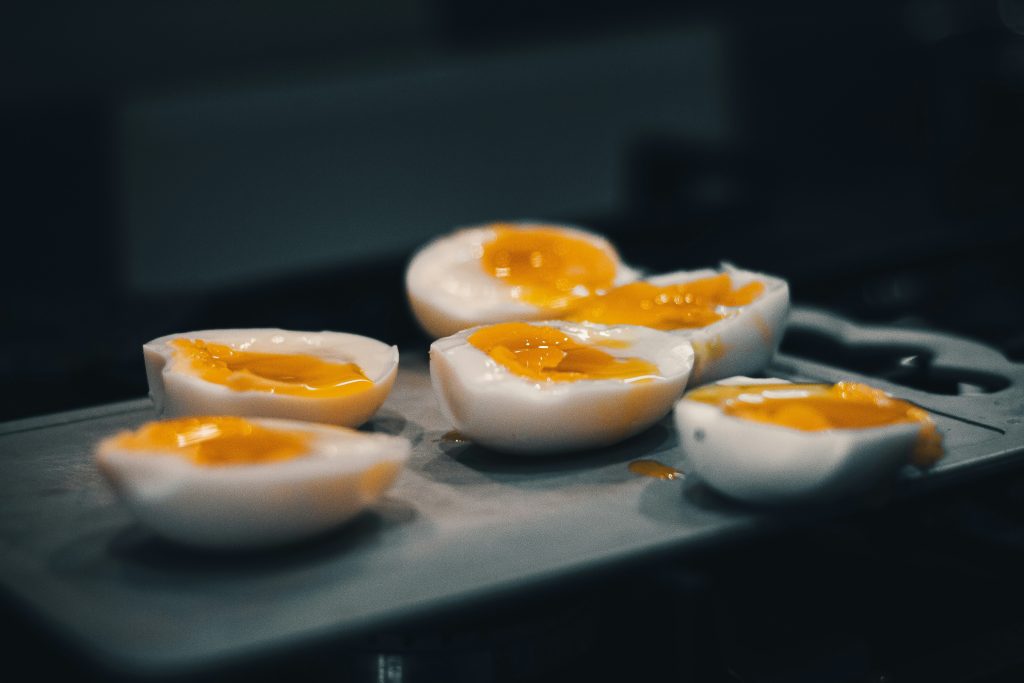
Raw or soft-boiled eggs can have a wonderful effect on the coat. Eggs are high in choline (good for the liver) and provide a source of beneficial fats. High omega-3 eggs or eggs from backyard chickens are preferred.
If you’re concerned about salmonella, washing the outside of the shell before cracking can help, since most contamination comes from the shell surface rather than inside the egg. You can also soft-boil the egg, cooking the white while leaving the yolk runny. This reduces any bacterial risk while preserving the benefits of the raw yolk. Why does this matter? High-heat cooking can oxidize the cholesterol in egg yolks, creating compounds called oxysterols that may be inflammatory. Keeping the yolk soft or runny avoids this.
If you’re worried about avidin (a protein in egg whites that can theoretically block biotin), soft-boiling the egg can also help with this.
Suggested amount: A few eggs per week, mixed into meals.
Beef Liver
Beef liver is incredibly nutrient-dense and rich in beneficial fats. Organic and free-range is preferred. Because it’s very rich and high in copper, liver should make up no more than 5% of the overall diet. You can add it fresh (cooked or raw) or use dehydrated liver as treats.
Omega-3 Supplements
If you prefer to use a supplement, quality matters. Many cheaper fish oils are poorly absorbed or slightly rancid. Avoid any fish oil with a strong fishy smell, as this indicates oxidation.
My preferred brand is Nordic Naturals. They make a pet version that’s the same as their human product but without the lemon flavoring. It’s clean, high-quality, and well-absorbed.
That being said, I generally prefer whole foods over supplements when possible. The problem with adding only fat is that sometimes there’s also a mineral deficiency contributing to the blood deficiency. Whole foods address both.
A Note on Salmon
I used to recommend salmon oil more freely, but over the years I’ve noticed increasing sensitivities to it. Some pets react with itchy skin or ears, not just digestive upset. I don’t know if it’s a preservative issue or something else about modern salmon, but I now tend to stick with smaller fish like sardines and anchovies.
I also avoid tuna because of mercury concerns.
What If Your Pet Can’t Tolerate Fats?
If your pet has a history of pancreatitis, those cases tend to be more complicated. I’ll be writing separate posts and making videos about how to help those patients. In the meantime, Dr. Steve Marsden has some helpful videos on YouTube, and his Facebook group is a good resource if you need guidance for pancreatitis cases.
For dogs who simply can’t seem to tolerate fat in the diet (without a pancreatitis history), here are a few strategies.

Go slow. Then go slower.
For pets with sensitive digestion, you never want to start with a large amount of anything new. I also don’t recommend trying two things at once, since if your pet has a reaction, you won’t know which one caused it. This is a hard and fast rule for all sensitive cases.
That said, some pets can tolerate more fat than we realize, especially when it’s mixed into a full meal and balanced with carbohydrates and protein. The combination seems to help. What you want to avoid is feeding a high-fat snack (like cheese) away from a meal, because you lose the protection that comes from diluting the fat with other ingredients.
For some dogs, the answer is simply adding fats very slowly and gradually over time.
Chinese herbs for chronic digestive issues
For dogs with chronic soft stool, low-grade diarrhea, or intermittent digestive upset, I often start with herbs that support digestion.
Shen Ling Bai Zhu San is a gentle formula that helps many dogs with what’s called spleen deficiency in Chinese medicine (I’ll write a separate post on this pattern). After one to two months on this formula, if the digestion feels stronger, you can start slowly experimenting with adding higher-fat foods.
If your pet is more prone to colitis, or sudden inflammatory/ explosive diarrhea, then Si Miao San may be a better fit.
Another formula I use is Dispel Dampness and Nourish the Skin (made by Kan Essentials). It does exactly what the name suggests: it dries out internal dampness while gently nourishing the skin and blood, bringing more circulation to the periphery. This is a great herb for dogs with a weak digestion but dry skin. After at least one month on this formula, you can start slowly adding a bit more fat to the diet.

These cases can get tricky, so I recommend working with a veterinarian or practitioner trained in Chinese herbs.
Heal the gut lining
Another approach that can be used alongside herbs is focusing on gut repair. Supplements like L-glutamine or the peptide BPC-157 (available through Integrative Peptides or a product called Protect by Pet Matrix) can help repair the intestinal lining. I’ve found that once the gut heals, some sensitive pets can begin tolerating fats that previously caused problems.
Consider probiotics
There’s some evidence that probiotics can help pets handle dietary fats better by supporting the gut bacteria involved in digestion. Adding a quality probiotic may improve overall gut health, which in turn can help your pet tolerate fats more easily over time.
Final Tips
- Introduce changes slowly. Add one new food at a time in small amounts, and gradually increase once you see your pet tolerates it well.
- Whole foods over supplements when possible. Sardines, tripe, and eggs provide a complete nutritional package that isolated supplements can’t match.
- Watch the coat. Decreased shedding, increased shine, and less dryness are good signs that your approach is working.
- Be patient. It can take several weeks to see significant changes.
- Work with a professional if needed. If your pet falls into the fat-sensitive or complex category, or if simple dietary changes aren’t helping after 6-8 weeks, consider consulting with a holistic veterinarian.
The Bigger Picture
Blood deficiency is one of those patterns that, once you see it, you can’t unsee it. It’s quite common in pets today, particularly those eating kibble or heavily processed diets. The good news is that it’s often responsive to the right interventions.
By understanding this framework, you can connect dots that conventional medicine often misses. That dry skin, that anxiety, that tendency toward injury, that dull coat that never quite looks healthy: they may all be telling you the same thing. Your pet needs more nourishment, more good fats, more of the building blocks that create healthy blood.
And when you provide those things, it’s remarkable how many seemingly unrelated problems can improve together.
Have you tried addressing blood deficiency in your pet? I’d love to hear about your experience in the comments.

All rights reserved © 2021 | Dr. Magda | Website by Homebody Web Co.